AI CX Drives Customer Loyalty by Being Persistent, Polite, and Compliant
At a glance
- Early-stage delinquency outreach is fundamentally a volume problem that human teams struggle to cover efficiently.
- AI agents can deliver proactive reminders, negotiate promise-to-pay dates, and offer payment options at scale.
- The real differentiator is consistency: tone, compliance language, and follow-through don’t drift.
- AI CX systems should be designed for auditability and escalation from the beginning, not added later after issues arise.
A practical first step in voice-first CX
Delinquency outreach—often labeled debt collection—is one of the most practical applications of voice-first automation in banking.
The work is repetitive, time-sensitive, and operationally expensive. When handled entirely by human agents, outreach capacity is limited by staffing and schedule constraints. Many calls go unanswered, and teams simply run out of time to reach every customer who needs a reminder.
Conversational AI CX agents change that equation by expanding outreach capacity while maintaining consistent communication standards.
The core job: Reach more customers earlier without damaging trust
In early-stage delinquency, the objective isn’t pressure. It’s resolution.
Banks want to remind customers about upcoming or recently missed payments, provide flexible repayment options, and secure commitments to resolve the balance.
AI CX agents can handle this outreach proactively. They place reminder calls, negotiate promise-to-pay dates, and present payment options, tasks human agents must handle one conversation at a time. AI agents, however, can conduct thousands of these interactions in parallel and continue outreach without fatigue, expanding coverage across the portfolio.
Since AI agents don’t fatigue, they can keep up the same pace and quality of interaction throughout the day. Unlike human teams, which are limited by shift length and workload,AI systems can handle large volumes of conversations continuously.This allows enterprises to reach more customers earlier in the delinquency cycle, improving the likelihood of timely resolution.
Even without focusing on specific performance claims, the operational math is straightforward. Parallel outreach combined with consistent execution allows banks to reach far more customers than human teams alone.
Why compliance is central to recovery automation
Payments and recovery workflows operate within a highly regulated environment.
Regulators and internal risk teams expect institutions to demonstrate that customer communications follow approved policies and avoid misleading or abusive language.
Well-designed conversational systems can help enforce those standards. AI agents can be restricted to approved language, maintain complete logs of every interaction, and apply consistent tone across every conversation.
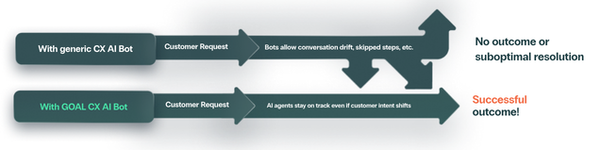
For payments and recovery outreach, that translates into several operational requirements:
- Approved language must be enforced so that communication remains within policy boundaries.
- Every interaction must be logged so institutions can demonstrate what was said, when it was said, and how the customer responded.
- Tone and persistence must remain consistent across the system so outreach stays firm but respectful.
These capabilities turn compliance from a risk exposure into a built-in feature of the system.
Design principles that make recovery AI work in production
Successful deployments usually follow a few practical design patterns.
- First, segment the workflow. Many teams begin with early-stage reminders and straightforward resolutions before moving on to more complex recovery scenarios.
- Second, define escalation triggers explicitly. Signals such as customer confusion, hardship indicators, disputes, or high-risk accounts should automatically route the conversation to a human agent.
- Third, measure outcomes rather than activity. Counting outbound contacts doesn’t provide meaningful insight. Instead, track right-party conversations, promise-to-pay agreements, kept commitments, and cost per resolved account.
- Finally, treat auditability as a product capability. In regulated industries, the ability to reconstruct an interaction later is essential.
Payments and recovery automation isn’t simply customer service with a different script. It’s a revenue workflow that requires operational discipline and compliance safeguards.
How Acclaim helps
Acclaim is designed specifically for regulated voice workflows such as payments and recovery outreach.
Its GOAL-oriented AI CX agents can deliver payment reminders, negotiate promise-to-pay commitments, and guide customers through repayment options while maintaining a consistent tone and approved language.
The platform also emphasizes compliance and auditability. Conversations are logged with full transcripts, policy enforcement ensures agents stay within approved communication boundaries, and escalation paths allow complex situations to transfer to human agents when necessary.
Because Acclaim’s architecture supports large-scale voice outreach, banks can reach significantly more customers earlier in the delinquency cycle while maintaining respectful, compliant communication.